
finding a greater purpose through the creative process (with Malachi Brown)
What is the role of music in social activism, and vice versa? What was it like to graduate into the first year of the Covid-19 pandemic? How is our creative process affected by our challenges?
Dear Reader,
This has been a challenging week, but in a very fulfilling way. I started the week with a performance of excerpts from Messiah, including “Rejoice Greatly,” an aria that I’ve been learning and preparing intermittently since high school. I had two days of intense recording sessions for my prescreen auditions for graduate school. I’m proud of the work I’ve done, but have some things I am planning to re-record to ensure I am putting my best foot forward. I’m writing this on Friday night, and tomorrow, I am heading to Syracuse for a vocal competition, before once again recording and performing some Messiah on Sunday. All in all, I am feeling fulfilled by the wonderful music around me, but a little physically and mentally drained. I’m looking forward to some fun travel next week :)
I am really grateful that I have a number of new readers, many of whom I believe found this newsletter from a recommendation by Kathleen Kelly of Overcoached. If you’re new here, welcome! Please feel free to check out the first few editions of this letter to learn a little more about me and my intentions when writing. And to everyone reading, thanks for taking the time to be here.
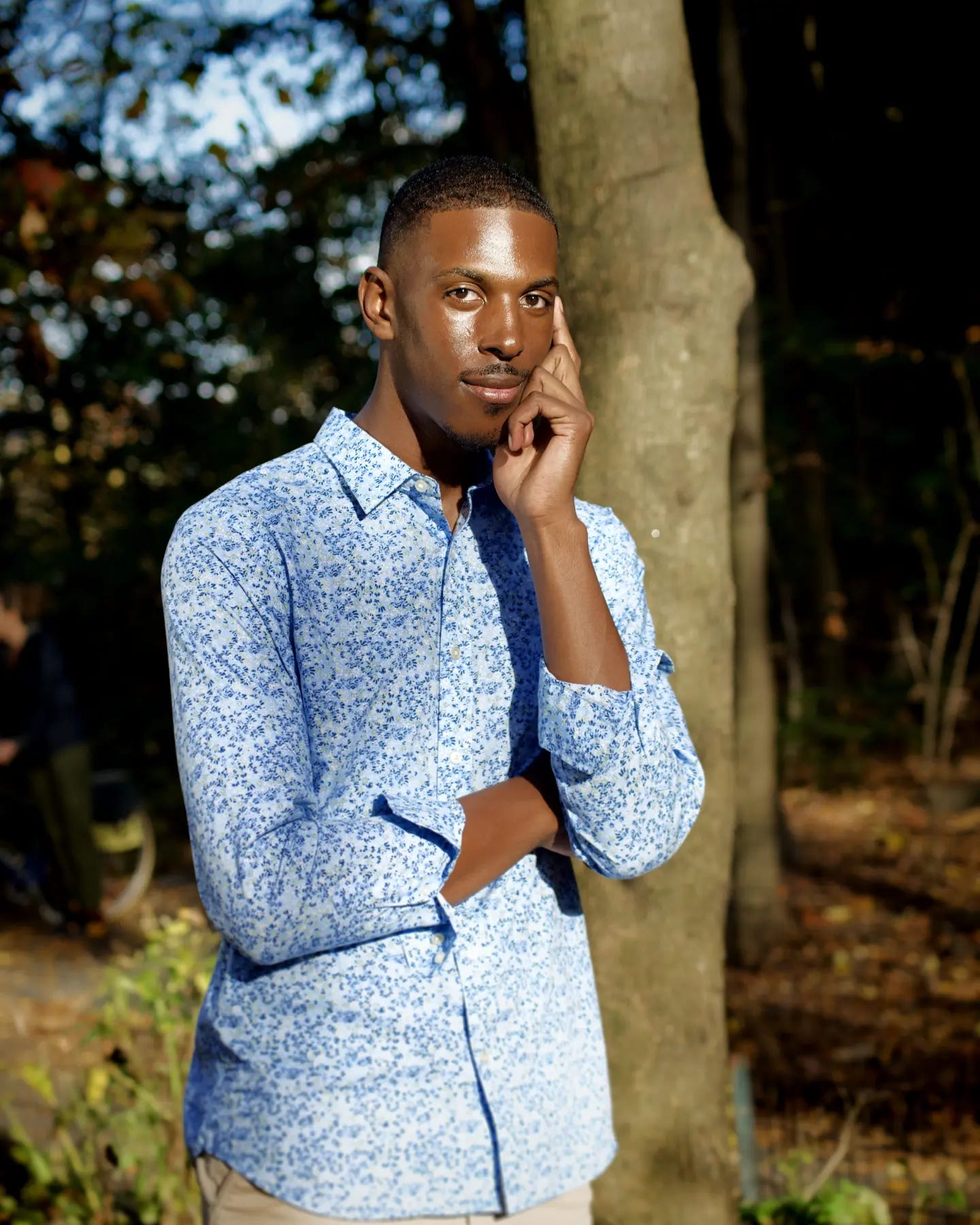
This week’s conversation is with a friend from my undergraduate studies at Ithaca College. Malachi Brown graduated a few years before me, but was always incredibly kind and generous with his warmth and musical presence. We ran into each other this summer after a gig at Lincoln Center, and our quick catch up made me curious to learn more about what he’s been up to. In this interview, we talk about the intersection between his musical work and political and social activism, the hardships of graduating in 2020, and the creative process of writing and developing ideas. I hope you enjoy!
Who are you and what do you do?
I’m Malachi Brown, and I’m a cellist, composer, writer, and teacher living in New York City.
We were at Ithaca College together for a couple years, but you graduated a few years before me. Can you tell me about what you’ve been up to since then?
Let’s start from right after I graduated… three months after I graduated, the pandemic started. I was already living in New York at the time, in Harlem with my grandmother, but that turned into a difficult situation because of the isolation. It was very difficult financially because of the fact that no jobs were hiring, except for the essential workers. I couldn’t even get a job at McDonalds, and was just asking, “what is going on?” I ended up moving back to Virginia and Doordashing for the summer before I started teaching music at two middle schools. It was back in my hometown, with familiar kids. I didn’t know I had it in me, but I had to do something. I had been teaching tennis for a long time, but I didn’t know how I could apply that to music, especially in the school setting.
I ended up teaching for the whole school year, and I made plans that I would only teach one year before moving back to New York, and that’s exactly what I did. I had to, of course, hustle - I’ve always been hustling - but it became a hustle for what I wanted to do. I still had backup jobs that I was doing when I first came here, but New York is no joke, and post-pandemic New York is really no joke. I ended up getting a teaching job in tennis while I was trying to freelance, and I got my very first gig with a group called Protestra. I truly adore that group; I’m going to be playing with them again this December. That was my very first New York gig, and I got it a week before their concert even though they had been rehearsing for a while beforehand, because of one of my friends. He couldn’t do the gig last minute, but he recommended me to do it, and they invited me on. At this point, I hadn’t played cello for three months, and I was burnt out from tennis. I had to learn Beethoven 6th, and a number of new pieces, within a week. And on top of that, when I got to the first rehearsal, they put me in a principal seat! I had to get back to where I was a year before in terms of my playing within a week because I wanted to look my best at my first gig. I did my scales all week for hours, and got back into it and did the concert. I made a point to introduce myself to as many people as possible in the organization. They saw who I was: I couldn’t hide, because I was sitting first chair, and I felt I needed to make sure I did a good job and introduce myself to people so I could get more gigs.
And it didn’t take but five months for me to start doing more gigs, which I was very happy about. I started doing Highline String Quartet gigs, and they’re pretty well known in the city for doing Weddings. Coincidentally, it was the same person who got me the Protestra gig who got me the Highline gig and got me on that roster. So I realized, you need that one person in your corner, and they will help you. It was truly a blessing, because I was still struggling with my tennis job, and was living in Washington Heights and traveling all the way over to Queens. And having a car, I was getting tickets all the time because I have out of state plates. There was a lot of figuring it out while I was trying to get my musical life together.
At that time, I was going through a major depression, and I was trying to write music about it. I don’t really keep a journal, but I keep musical ideas as a musical journey. I jot down my emotions for the year, and get my feelings out, and I was trying to figure out what would accurately describe what I was feeling throughout that time. I knew I was where I was supposed to be, but I didn’t know how to use that to my advantage. It was really hurting me for a little bit. Fast forward, and I’m doing more gigs, I get scammed by a couple of people. There are a lot of jobs out there - I was applying to all of them - and there are some that are scams that make it onto Indeed, unfortunately. So that happened, and I was still in the tennis job, and still going forth and trying to do my thing.
Also, when I first moved there, in addition to my first orchestral gig, I was also in an acting group. I met them through a coworker at a tennis camp, Tashrika Sharma, and I ended up scoring two of their films during that time, and acting in one of them. Having the score, and seeing my stuff on screen, was interesting. I also did a tour of a play about communism, and I co-scored the music to the play while acting it, which was interesting. I ended up meeting a lot of great folks through the play, which had a two year tour run, and we even got invited to Socialism 2022 in Chicago. They flew us out, and paid for everything, and we performed for one night only. It was an amazing show, one of our best. It was amazing to see your work being moved to another city - I had never been to Chicago. And I thought, “okay, maybe this whole music thing will stay with me.”
And then I got signed on to score an animation, and things were starting to settle in. I was doing my thing, getting more gigs. I was able to make more connections, and that was my main thing. I felt that if I didn’t have any connections, and was just doing the job, I wasn’t fully preparing myself for the next step. This year really turned it out for me, leaving me booked and busy. I started making good friends with people from Juilliard and MSM, and played my first gig with two organizations - Protestra again, in a collaboration with Sound Off! Music for Bail, which raises money for incarcerated people, and really advocated for dismantling the prison industrial complex. They believe that nobody deserves to be in jail unlawfully, which is more than half of the incarcerated population, unfortunately. So we worked to help get them books and make sure they are safe in jail or in prison. Their life conditions are awful. I was finally able to participate in groups that are fighting what I believe in. It was amazing to be able to pose the questions, “What are we fighting for? What are the other options outside of Capitalism that we can work on?” Joining this group was amazing, because we performed only composers of color, and making sure that they can actually be visible, because you usually only hear the same few composers of color. I was trying to do my best, networking and meeting people, and exploring different art mediums, and working beyond cello and composition.
All of this was still very much overshadowed by the fact that I was truly depressed at that time, and trying to be a functional human. I had a functional depression - I still had to work, and you couldn’t stop me. I had to go through and do what I had to do.
That’s incredible - I’m so happy for all of these opportunities coming your way! I’d like to ask more about your experiences coming out of the lockdowns. I’ve heard that time be referred to as the “lost years,” the year when our lives looked completely different than the ways we thought they would. As much as you're comfortable, do you mind talking a little more about the mindset that they created for you?
Yeah - honestly, when I graduated, I didn’t really have a plan. A lot was happening, and I was left asking, “now what do I do?” I pictured a life where I would move to New York, get a menial job, and then just start gigging, because the New York music scene was so big. Once I’d figured out that I wanted to work and save up enough to get my own apartment, I was starting to put those pieces together little by little, but the pandemic really derailed that. Even in my personal life, I was asking so many questions about what would make me happy. On top of that, not being able to leave the house except for essentials, which was even harder because of the fact that I was in Harlem, which was the hub for Covid related deaths. We weren’t getting the same treatment as the other boroughs, and there were a lot of people who didn’t even believe in the pandemic. There was a lot of misinformation, which was tough.
I ended up getting this project from a friend, Jasmine Pigott, who made an album of works by specifically Black composers for solo tuba or tuba with ensemble. I thought, “okay, at least I’m still composing.” But it was so hard. Usually I can pump a melody out fast, but I could not get into the mindset. I was sleeping all day, questioning what I was going to do. It truly messed with my mind because I was not experiencing the same inspiration than what I do with exploring. When I walk around, I can hear music from the things that I see, and that was truly limited when all I had was the same two views in the same old room. It got old. I remembered that I still had other things that I could do, not just music, but screenwriting, for example. I wanted to learn how to properly screenwrite, versus when I made films at school. I made films at school based on the music that I wrote. So I learned how to write and actually put it down on paper. I was trying to figure out how to film inside my grandma’s apartment, just to keep myself creatively fulfilled, to help me not sink into a depression.
You mentioned using art, or composing, or writing, as your journal for understanding and keeping track of the things happening in your mind. Do you feel a different creative process arises from that, versus say, a commission or something based on someone else’s experience?
I’ve realized that it does start to change. Before, when I started composing, in Virginia, I used to pace around in my kitchen, and that was where I got all of my ideas. I would just pace the kitchen, and music came, and I would write it down. But once the pandemic came, it felt weird to not have the kitchen around. But I realized that it was just the process of moving, rather than the environment of what I had around, so I started using the entirety of my grandmother’s apartment. That would get my brain to work, but it didn’t help with the different things I was feeling. It didn’t come to me to show me the emotion I was feeling at that time, or to show me how to remember them. It wasn’t working that way. A melody can be a melody, but for me, it definitely has to be something meaningful to me. I realized that, once the lockdown started letting up and I could go back out into the world, I would experience that in different ways, and hear music in new ways.
You mentioned a lot of really incredible projects that involve activism, and really questioning and challenging the systems that we live under in the United States. What do you think our role is as musicians and writers in activism and social change? How do you contribute to these conversations with the things you do?
From what I’ve learned, I believe you need to take a stand with what you do. Just playing the music isn’t enough. Your music can be making a difference, especially financially, as that’s usually where the change is coming from. Unless you’re making it known that you stand for something, I don’t think it’s enough to just play the music, which a lot of organizations did during the pandemic.
2020 was a year. I questioned whether I should write about it, musically, but it felt too opportunistic. I felt that feeling wasn’t enough anymore, because actual change needs to be happening. The ensembles I began working with were actually making changes in the community, and we’re actually able to pay our musicians. Just as much as we wanted to help the cause, they wanted to help the musicians, because it is their duty to take care of them.
In order to really make the change, you have to really make sure it’s actionable. Just having the art for art’s sake isn’t actually moving anything. If you really want to make a statement, make the statement, and have people question it, and have people donate to whatever cause you’re trying to fulfill. For example, I helped to found a quartet, the Atrium Quartet, and we definitely knew we wanted to make money, and we wanted to help donate to a cause we believe in. We donated a piano with some money that we made to a kid that was in juvie, because he showed so much interest in piano. He really wanted to play the piano, and one of our quartet members taught him piano lessons, and informed us that he had nowhere to practice between lessons. We just have to give people a chance, especially incarcerated individuals, who may have been unjustly sentenced. So we donated the piano to the kid, and at our coming concerts in January and February, we want to be able to do more. We want to be able to help our communities, and also showcase artists that aren’t on the map. For our first concert, we collaborated with three artists to make a film, and then displayed art from the other two. We want to be able to help our communities, to make sure that we’re causing some sort of change.
So that’s what I believe our activism should look like now. Art for the sake of art is still contributing to the capitalism of art.
I think a lot of folks feel afraid or ashamed to talk about the financial side of things, and the ways you can use that to make an impact. While a lot of people have good intentions and well meaning efforts, they’re not all taking the next step of financially fighting back against the capitalistic struggles of being an artist, and to directly reach out to a human being and provide something that could offer betterment to them.
It’s not taboo. There are clear organizations that support certain things, and we have to be able to understand what we are working to support.
What advice would you give to your 17 year old self, if you could go back in time and speak with them?
I don’t really know. I feel like going back in time to say something to your former self implies that there may have been a regret or two, and I think that everyone has their own path, and my path has led me where I need to be. I feel good about that. If anything, I would give a word of encouragement to keep doing what I was doing. Don’t have any regrets about what you do, and know that you’re gonna end up where you need to be. And that’s honestly what my mantra has been. I don’t feel bad about where I am, and what I’m doing.
That’s a great message, and it says a lot that you wouldn’t want to go back and change anything, or push things in a different direction. That’s a good thing to know.
Do you have any specific projects or other things coming up that you’d like to mention?
Look out for The Candy Lady, the animated film I’m doing! I’m going to start a Kickstarter soon for my web series, and we’re going to have a reading session that will be put up to be funded.
Finally, I’d like to leave this by saying that telling the stories that aren’t usually heard is really impactful, and that art an important part of activism.
I want to take a moment to thank Malachi for his openness, and for sharing his insightful experiences in this conversation. I am inspired to take a page out of his book in finding new ways to connect my work as a musician with the social causes that I truly care about, and I encourage you to check out the organizations mentioned and do the same.
Feature: God Is Just the Universe by Corey Kilgannon (listen here)
This song came up in a Spotify-recommended playlist this week, and, on first listen, I enjoyed the simplistic instrumentation and vocals. Some of the lyrics caught my attention, and at first, I honestly just assumed that it was a Contemporary Christian song. No judgement to Contemporary Christian Music, but it’s not usually my genre of choice for casual listening. It kept showing up in playlists, though, and I decided to take the time to read the lyrics, and was genuinely very interested in what they have to say. Here’s a sample verse:
I forgive myself, for I know now that desire burns down slowly
And time's a cosmic river that we measure to make sense of where we're going
All of our collected egos grit their teeth, beg for freedom
Subtly, in the form of our discomfort
'Til we learn the point is loving one another
I’ve been thinking a lot about the role of music in sacred practice, and, vice versa, the role of the sacred in musical and artistic history. Regardless of my personal religious beliefs, or lack thereof, I think it is important to understand and engage with the stories that music can help us understand about the sacred parts of the world around us. I really appreciated the questions that this songs asks about the role of God in the universe, and our part in fitting into a greater plan, regardless of its author.
Check it out if you want a nice song to listen to with lyrics that will make you think :)
Upcoming Performances:
November 12, 4pm; Calvary Baptist of Ithaca: Selections from Handel’s Messiah with Cayuga Vocal Ensemble
December 16, 7:30pm; Ford Hall, Ithaca College: Handel’s Messiah with Cayuga Vocal Ensemble and Cayuga Chamber Orchestra
December 17, 4pm; Pebble Hill Church, Syracuse: Behold, the Handmaid of the Lord with Syracuse Schola Cantorum
Oh, also, here’s a bonus recording from my competition this week. This is C by Francis Poulenc with Sona Minasian :) It’s not the best audio quality, but I was proud of the performance, and I’m working on sharing more recordings along the way as I perform more. I hope you enjoy listening!
Thank you for reading <3
Love,
Caitlin
Can’t commit to a paid subscription, but still want to support the creation of this newsletter? Leave a tip, or share this post with a friend!